The Tarnish Panic: What Darkening Can and Cannot Tell You
Silver tarnish can signal a surface reaction, not poor quality or damage. Learn how to read the surface and choose whether to leave it, clean it, or seek advice.
Is that dark patch on your silver a warning sign, or simply a surface change? Silver tarnish can look alarming, but darkening alone cannot tell you whether an object is damaged, badly made, or solid silver. Read the pattern, consider the object’s surroundings, and check its surface before deciding what to do.
Darkening is a clue, not a verdict
Tarnish is a change at the surface, commonly seen as gray, brown, or black discoloration. Silver can react with substances in the air and with materials nearby; the result may appear as a film, spots, or a gradual loss of brightness. That change is not the same as a dent, crack, worn-through coating, or failed joint.
Appearance still matters, but it needs interpretation. A darkened serving spoon kept in a lined drawer may have a different story from a bright object with an uneven surface. Neither appearance alone settles the question of material or condition. Look for patterns and context rather than treating “dark” as a diagnosis.
It also helps to separate preference from condition. Some owners like a softly toned surface, especially in recessed ornament; others prefer a brighter finish. Wanting a polish does not make tarnish harmful, and leaving a surface darker does not automatically mean neglect.
Compare the surface before choosing a response
There are three sensible approaches: leave the surface as it is, clean it gently for use or display, or pause and seek an informed assessment. The right choice depends on the object’s role and what you can see.
Leave it alone when the surface is stable and suits the object
This approach suits a piece whose darkening is even or settled, whose details remain legible, and whose current appearance pleases you. It can be especially reasonable for a display object or one with delicate ornament, where repeated polishing would alter the look you want to keep. You can store it thoughtfully and check it from time to time without trying to make it shine.
Clean gently when use or appearance calls for it
A careful clean may suit a plain, sturdy piece intended for handling or serving, particularly if the dark film bothers you. Use a silver-care product appropriate to the object and follow its directions. Choose a soft cloth, work lightly, and avoid abrasive pads or improvised scrubbing; aggressive rubbing can leave marks and remove detail or surface treatment.
Ask for an assessment when the evidence is unclear
A conservator or reputable silver specialist is the better choice when you see flaking, a lifting layer, unusual colored deposits, deterioration around a join, or a patch unlike ordinary tarnish. This is also sensible before cleaning a valuable, sentimental, plated, or unusually decorated object. A knowledgeable person can consider construction and condition rather than judging from color alone.
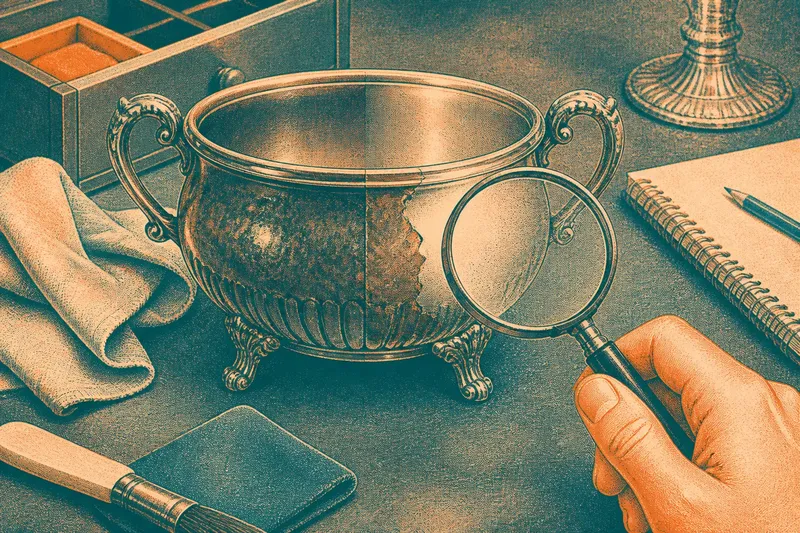
Say you inherit a silver-colored sugar bowl with dark lines in its creases and a bright patch on one side. In this invented situation, you want to use it for serving. First, you note the pattern and inspect the surface in good light; then you check for marks that might identify it as solid silver or plated. The patch looks like a different layer showing through, so you stop short of polishing and ask a silver specialist to assess it. The resulting decision is to wait for that assessment before serving from or cleaning the bowl.
Read color and pattern in context
Darkening in crevices can be ordinary tarnish, but a patchwork appearance deserves a closer look. Uneven exposure, contact with other materials, and earlier cleaning can all leave different tones across one object. A narrow bright strip beside a dark area might reflect handling or past polishing; it might also point to wear in a plated finish. Color raises a question, not a conclusion.
Consider where the object has been kept. A closed cabinet, a drawer with a particular textile or insert, and a display near household air pollutants can create different conditions. If several objects stored together show similar changes, that shared setting may be relevant. If only one object has a sharply localized mark, inspect that area and its construction rather than assuming the whole piece has the same issue.
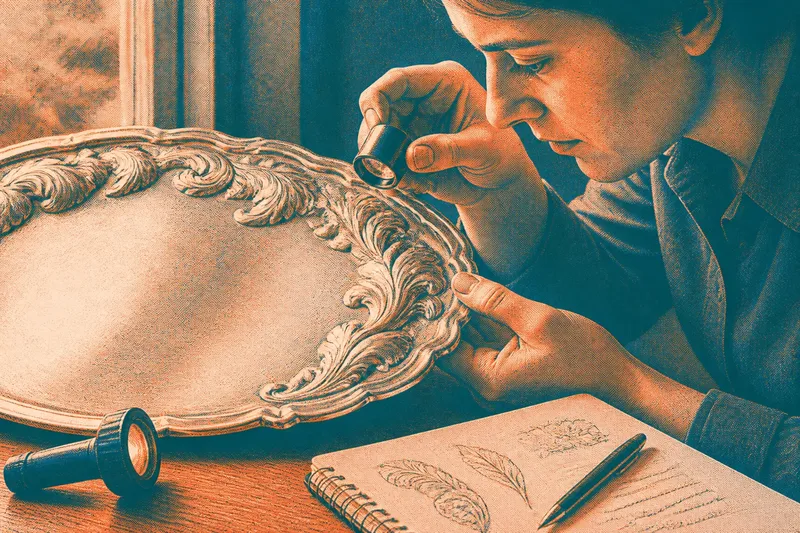
Use bright, diffuse light and turn the object slowly. Check the rim, underside, handles, joins, and raised details. A magnifying glass can help you distinguish a smooth film from cracking or a rough deposit. Do not scrape a mark to see what lies beneath; that can damage the surface and erase useful clues.
Care history changes what darkening means
Past care can explain an appearance that otherwise seems puzzling. Frequent polishing may leave recessed areas darker than raised ones, because cloth reaches exposed surfaces more readily. A silver dip or other treatment may brighten a piece quickly, but repeated or unsuitable use can affect details and finishes. A previous owner may also have applied wax, lacquer, or a household cleaner, making the surface behave differently from untreated silver.
When you know the history, write down what was used and where. Keep product packaging or instructions if available, and note which areas were cleaned. If the history is unknown, avoid trying several products in succession. Each treatment can change the evidence and make later assessment harder.
Not every object needs a special ritual. It is usually not worth polishing a piece solely to erase every shadow from its recesses, or buying an assortment of cleaners before you know what the object is made of. Simple observation and suitable storage may be all that is called for.
What should darkening tell you before you clean?
Does dark tarnish mean the silver is low quality?
No. Darkening alone does not establish an object’s purity, construction, or quality. Marks and physical characteristics can offer clues, and a silver specialist can assess uncertain cases.
Can I polish silver until every dark mark disappears?
Polishing can reduce tarnish, but repeated or forceful rubbing may remove surface detail or wear a plated layer. Stop if the cloth catches, the finish changes unevenly, or the mark does not respond as expected.
How can I tell tarnish from worn plating?
Color alone is not a dependable test. A sharply defined area with a different-looking layer, especially on a raised edge or frequently handled spot, may warrant examination by a silver specialist rather than more polishing.
Should I clean a darkened inherited piece before using it?
First identify the material and check that the object is sound and suitable for its intended use. If its construction or surface is uncertain, ask a qualified professional before cleaning it or serving food from it.
Choose the least intrusive care that fits
For an everyday decision, start with three questions: Does the darkening look like a surface film, or might the material or a coating have changed? Does the object need to be brighter for a practical reason, or is brightness simply your preference? Could cleaning remove a finish, detail, or evidence of the object’s history?
- Check whether the darkening is a smooth, even film; if it is and the surface is stable, leave it alone or use gentle care if brightness is needed, but seek advice if the surface is rough or lifting.
- Check the rim and raised edges for a different-looking layer; if you see one, stop polishing and ask a silver specialist, but if the surface appears consistent, continue assessing the object’s other features.
- Check for flaking, cracks, or deterioration near a join; if any are present, do not clean or use the object until a conservator or specialist has assessed it, but if none are visible, consider its material and purpose.
- Check for maker’s marks or other identifying marks; if they suggest plating or mixed materials, choose only care suitable for those materials, but if the marks are unclear, seek an informed assessment before treatment.
- Check any product label and maker instructions; if they permit use on the object’s material and finish, follow the directions with a soft cloth, but if compatibility is uncertain, do not apply the product.
- Check whether darkening bothers you or interferes with the object’s intended use; if it does and the surface appears sound, consider gentle cleaning, but if it is only in recesses and suits the piece, leave it in place.
Check maker instructions and product labels before using a cleaner, particularly on plated, coated, or mixed-material objects. A conservator can advise when the object’s treatment is uncertain. For silver tarnish, context and care history matter more than a single color. The most useful response respects both the object’s condition and the reason you own it.