Before the Display Cabinet: Silver on the Dining Table
Silver on the dining table moved between everyday service and formal display; learn to read its place setting, table role, and domestic presentation.
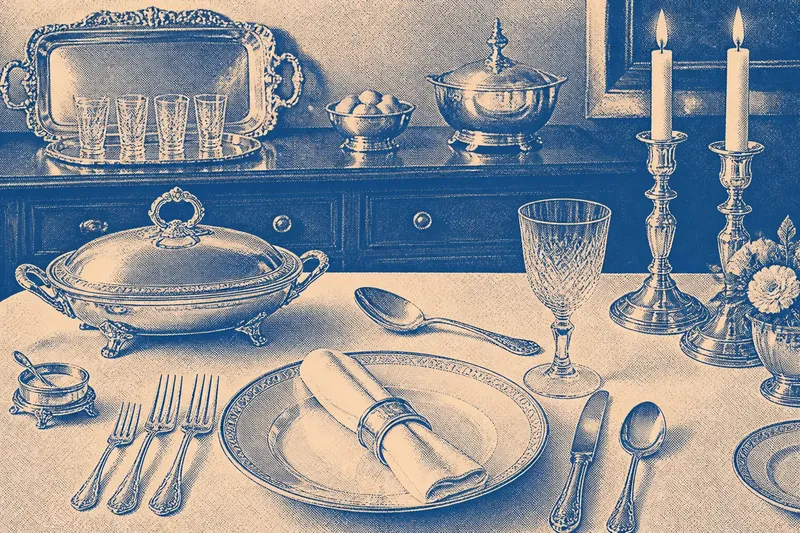
When did silver on the dining table stop being part of the meal and start being something to look at? The answer is rarely a clean break: a serving spoon might still pass potatoes while a matching pair of candlesticks waits for a special dinner. Reading that overlap makes a table object easier to understand than treating it as either ordinary equipment or untouchable decoration.
A table setting was a small stage
Silver made a meal visible as well as useful. A polished spoon, a bright tray, or a row of forks caught the light and signaled that someone had arranged the table with care. The message could be grand, but it could also be quiet: the good spoons brought out for Sunday lunch gave a familiar meal a different tone.
Formality was communicated through placement. A large serving piece near a platter had a clear job; a pair of candlesticks centered along the table created a visual anchor. Napkin rings and small salts occupied personal territory, close to each guest. Their position tells you whether an object belonged to service, decoration, or both.
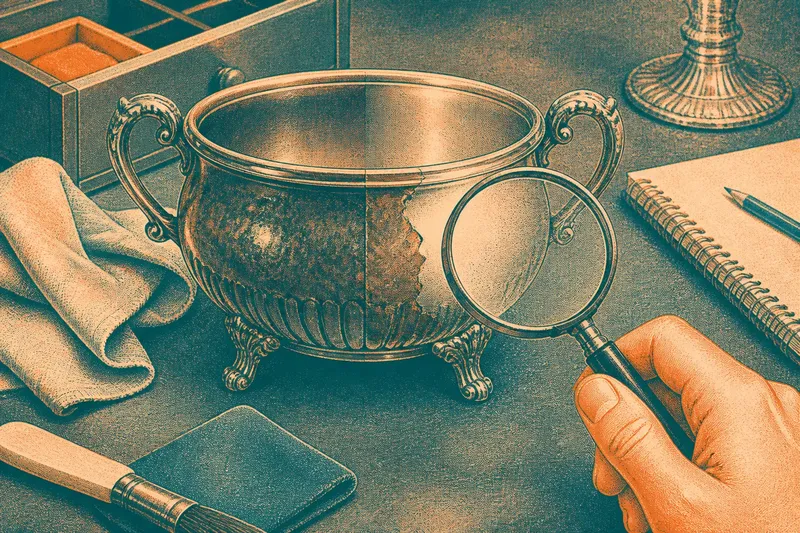
Look for wear in context, not as a verdict. A shallow scrape on the underside of a tray may fit repeated movement between kitchen and table. A clean, bright surface does not prove an object was only displayed; it may have been carefully maintained for occasions. The useful question is how its shape, scale, and wear relate to the work a table required.
Silver moved between daily and special meals
Households did not all draw the same line between everyday and formal use. In one home, silver could be a regular part of lunch; in another, the same sort of piece might appear only when guests came. Family habits, the size of the household, and the effort of polishing all affected where that line fell.
Some objects were naturally easy to keep in circulation. A spoon or small dish could serve a familiar purpose without changing the whole table. Larger pieces, such as a centerpiece bowl or a tall epergne, required more space and a meal arranged around them. Their appearance could announce an occasion before the food arrived.
That difference matters when interpreting a collection. A serving piece with a specific role may have been handled often, while an ornamental object could have remained visible between dinners. Yet an object’s intended role and its actual domestic life need not match. A family might place a practical bowl on a sideboard between meals, then return it to the table when needed.
What does a silver piece say about formality?
Did every silver object belong to a formal dinner?
No. A small spoon, salt cellar, or drinking cup could be used in ordinary routines, depending on household custom. Its material alone does not tell you how often it appeared or how ceremonious the meal felt.
Why put useful silver on a sideboard?
A sideboard kept serving objects close at hand while making their arrangement part of the room. A tray or covered dish could be ready for service and still contribute to the impression of an orderly dining space.
Does a matching set mean everything was used together?
Not necessarily. Matching pieces may have been acquired or kept as a group, but their practical roles could differ, and household routines could separate them. Look at scale and function before assuming they shared a place setting or occasion.
How can I tell whether a piece was mostly displayed?
Consider its form, stability, and likely task alongside wear and storage clues. A highly decorative object with no convenient serving function may have spent more time on view, but appearance alone cannot settle the question.
Sideboards connected service with display
The sideboard is a useful place to imagine the changing boundary between work and presentation. It could hold dishes waiting to be carried out, keep a tray ready for guests, and provide a backdrop for visible silver. Instead of hiding all equipment in a cupboard, a household could arrange selected objects where visitors would notice them.
This arrangement made display practical. A covered serving dish on a sideboard was not merely a sculpture: it was accessible when the meal called for it. A bowl might sit empty between gatherings, then take on a working role. The same object could shift from background to service without changing its form.
Imagine a household that keeps a silver tray on the sideboard beside a small bowl. The tray holds glasses when guests arrive, then carries cups to the table; the bowl remains visible between gatherings and is brought forward for mints after dinner. The observable result is a display that also supports hospitality, rather than a collection sealed away from use.
For a collector, this is a helpful distinction: display does not always mean withdrawal from domestic life. An object may have been positioned to be seen precisely because it was expected to serve. Its place in the room could communicate readiness, abundance, or welcome.
Changing taste altered the look of the table
Ideas of a well-presented table changed with habits of dining and entertaining. A densely arranged table with many visible pieces could suggest ceremony; a less crowded setting might feel more relaxed and leave greater room for conversation and serving. Neither approach is a universal measure of taste. Each reflects an idea of what guests should see and how a meal should proceed.
As presentation shifted, some silver objects became less central to the meal but remained useful as room furnishings. A centerpiece bowl might move from the middle of the table to a cabinet shelf. Candlesticks could stay in rotation for dinners while being arranged as a pair on a mantel at other times. These changes did not erase their earlier function; they added another layer to it.
When looking at an old photograph or family portrait, notice what is actually placed on the table. Are serving pieces grouped near the food, or arranged symmetrically for the camera? Is the table crowded with objects, or does silver appear in a few deliberate accents? Such details offer clues about presentation, though a posed image may show an idealized meal rather than routine use.
Read the object through its domestic setting
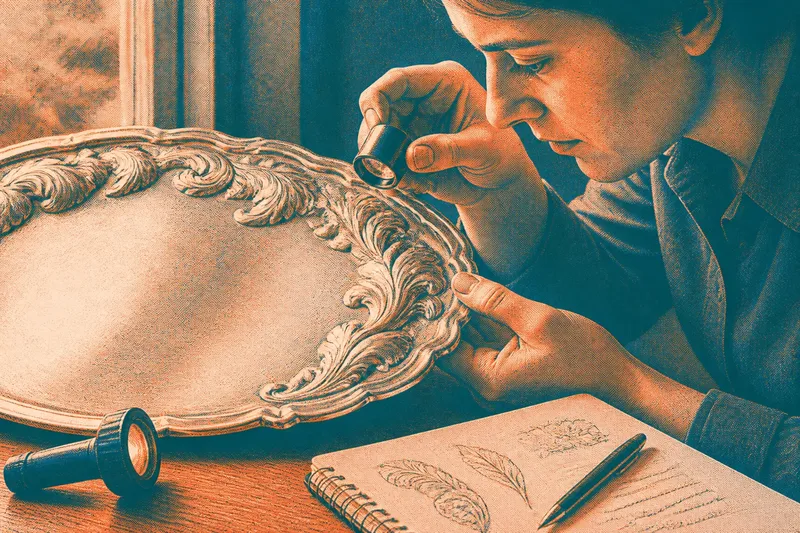
A useful note for a collection record can be modest and precise: “small tray, likely for table service; also suitable for sideboard display.” That wording leaves room for more than one use without pretending to know a family’s exact routine. Record visible features separately from interpretation, such as the shape of the handles, the height of the rim, and any wear where the tray would be lifted.
It is not worth forcing every object into a neat story about everyday use or formal display. A polished surface cannot reveal how often a piece appeared, and a decorative shape does not rule out practical service. Better questions are concrete: can it be carried comfortably, does it hold something securely, and would it fit on a crowded table?
Where a piece’s intended use depends on a maker’s label, manufacturer instructions, or local rules, consult the relevant source rather than guessing. For ordinary historical interpretation, though, attention to position and function often gets you further than an elaborate theory.
Silver on the dining table is easiest to understand as part of a household’s choreography: who served, where objects waited, and which meal called them into view. A piece that now sits behind glass may once have crossed a room in someone’s hands. Keeping that movement in mind helps preserve the object’s place not just in a collection, but in the lived arrangement of a home.